
More cos could join the likes of Burger King and Antony Waste in giving listing another shot.

Rakesh Jhunjhunwala has picked up a 1.29 per cent stake in Tata Motors. The September quarter shareholding pattern disclosed by the automaker showed Jhunjhunwala holding 40 million shares.

The markets regulator, Securities and Exchange Board of India (Sebi), recently introduced fresh guidelines to determine the place of a mutual fund (MF) on its riskometer tool.

The NSE held 25 to 100 per cent stakes in these entities through its subsidiary NSE Investments as of September.

T'I am not going to buy small- or mid-cap stocks at very high valuations if it doesn't make sense for the investors.'

As a result, the deadline for filing June quarter results ends on August 15. However, only 1,538 companies out of the 4,000-odd listed firms managed to declare their results within the usual deadline.


China is the world's second-largest - both in terms of GDP and m-cap. At $10 trillion, its m-cap is second only to the US at $38 trillion.

Several brokers used shares of dormant or inactive clients to provide margins for other more active clients. This prompted Sebi to rework its entire system of pledging.

Market players said the new norms were more suited for online brokers, where clients were typically internet savvy.
Many are now hoping the markets remain in good stead as they look to finalise the dates for IPOs, such as UTI MF, Computer Age Management Services, Happiest Mind, and Angel Broking. Most of the issues are expected to come to the market in the second half of September.

About Rs 4,257 crore worth of bids have been received so far and the Centre hopes that retail investors - those investing up to Rs 2 lakh - will place bids worth at least Rs 750 crore.

The issue also underscores the growing scrutiny by investors and voting advisory firms of the performance of board members.
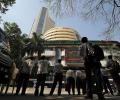
In the past four months, more than 4 million new accounts have been opened, taking the total to 44.3 million.

In the past four months, $7.5 billion has flowed back into domestic stocks, helping the benchmark indices bounce back more than 40 per cent from their 2020 lows.

The V-shaped rebound has been aided by a gush of liquidity flooding the global financial system, thanks to balance sheet expansion.

What worked for the markets was favourable global investor sentiment and encouraging flows into the emerging markets following stimulus measures taken by central banks.

Other measures being considered include relatively stringent KYC norms and a separate standard operating procedure for approval, renewal, and fresh investment from India's neighbouring countries.

The mid-cap universe - comprising firms that rank 101-250 in terms of m-cap - could see as many as 17 new stocks move out. Similarly, over half a dozen stocks could exit the large-cap universe, which is defined as the top 100 entities in terms of m-cap.

Market experts said disruptions caused by the pandemic - to businesses as well as the filing process - and the sharp decline in valuations were the reasons behind fewer new companies wanting to tap the capital markets.
 © 2026 Rediff.com - Advertise with us - Disclaimer - Privacy Policy - Sitemap - Feedback - About us - Terms of use - Grievances